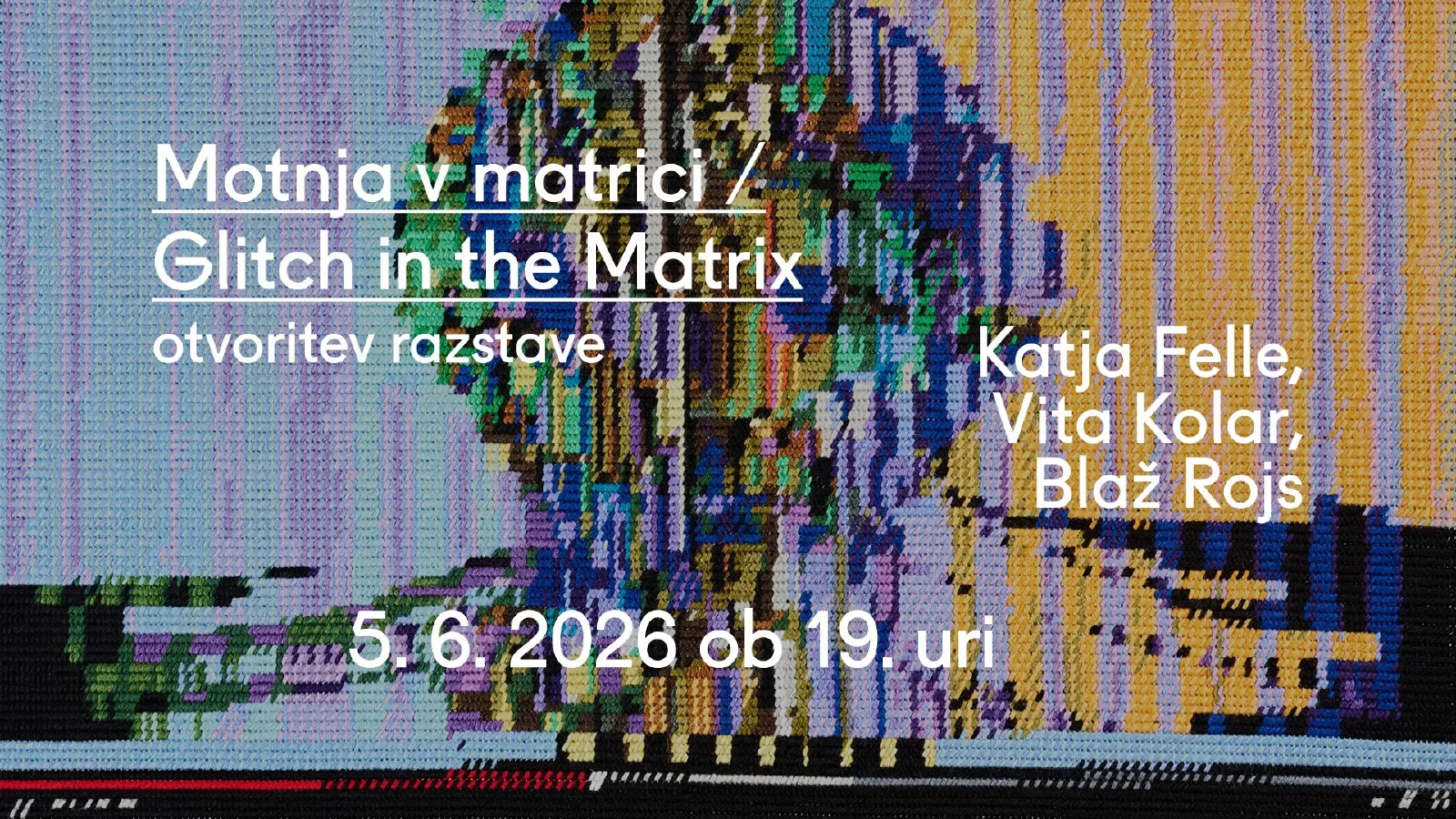
Çrregullimi i matricës
05
Qer
E premte nga 19.00 deri 22.00
Hiša kulture v Pivki (Snežniška cesta 2, Pivka)

Çrregullimi i matricës

Ju ftojmë në hapjen e ekspozitës me titull Çrregullimi në Matricë, e cila do të mbahet të premten, më 5 qershor 2026, në orën 7 pasdite në galerinë e Shtëpisë së Kulturës në Pivka. Çrregullimi i matricës 5 – 26 qershor 2026 Hapja: 5 qershor në orën 7 pasdite. Pjesëmarrësit Katja Felle, Vita Kolar, Blaž Rojs Kurator Sara Nuša Golob Grabner

Termin »post-internet« se v polju umetnosti in oblikovanja uporablja za označevanje praks, ki interneta in njegovih estetik ne obravnavajo več kot nekaj novega, temveč kot vseprisoten del vsakdana, ki je popolnoma spojen z našimi fizičnimi življenji. Običajno se post-internetna estetika nagiba k izpostavljanju nostalgije po zgodnje internetni kulturi, živih barvah, nalašč pretirano izpopolnjenih podobah ali, nasprotno, k pikselizaciji. Pogosto je namen tovrstne estetike nostalgična ironija, povezana s potrošništvom (denimo vaporwave), izpostavljanje občutka, da nič več ni preprosto določljivo in »resnično« ter poudarjanje neskončnosti interneta, ki presega zmožnosti in omejitve biološkega telesa ter bdi nad nami kot višja sila. Ena od prepoznavnih značilnosti post-interneta je motnja (glitch), ki je v sodobni umetnosti zavzela status posebnega likovnega simbola. Rosa Menkam v svojem delu The Glitch Moment(um) na samem začetku knjige predstavlja 8 pravil študij »motenjskega« manifesta (Glitch Studies Manifesto). Kot pravi, v grobem motnja predstavlja nepopolnost vsakega poskusa popolnosti, možnost za odkrivanje novih kombinacij, katarzo skozi dezintegracijo in predvsem sprejetje dejstva, da prav nič ne more potekati brez napak in da je lahko napaka način, na katerega lahko katero koli medijsko obliko pripeljemo v kritično stanje hipertrofije z namenom kritike njene notranje politike. Primerna je uporaba besede hipertrofija, ki v splošnem govori o povečanju velikosti posameznih celic, kar vodi do povečanja tkiv ali organov. Na pričujoči razstavi se podobe širijo, migetajo, intenzivirajo in do polnosti oživljajo v sijočih barvah. Predstavljeni umetniki post-internetno estetiko navigirajo z vizualno nasičenostjo, maksimalizmom in utelešenostjo nefizičnega preko fizične geste umetnika. Razstava funkcionira kot mini manifest proti vizualni tišini, izčiščenosti in delitvi na spletno in fizično resničnost. Katja Felle se na oljnih platnih iz serije Oblak od prej poznanih, fragmentiranih digitalnih podob pomika k abstraktnemu spajanju oblik in neomejenosti digitalnih prostorov. Popolna fluidnost predstave digitalnega oblaka aludira na popolnost tehnologije spomina, ki pa je brez posredovanja in aktivacije človeškega spomina in geste latentna, sama sebi namen in plavajoča v medprostoru, kjer se informacije pred človeškim posegom brezšivno prelivajo ena v drugo. V ročnem slikanju ekranskih podob v klasični tehniki sfumata se neizogibno pojavi napaka in kontrira popolni zglajenosti, h kateri teži obdobje, ko so digitalne vsebine neoprijemljive (čas po kasetah, disketah, zgoščenkah). Gobelini v nasprotju s tem komunicirajo s pikselizacijo, realizirano z vbodom niti. Šum, napaka v predvajanju in nezmožnost enotnega prikaza barve na ekranu so v dialogu z eno najstarejših likovnih zvrsti in hitrost prenosa podatkov upočasnijo na tempo človeka. Vita Kolar je v polju digitalne slike izoblikovala prepoznaven slog, ki pogosto nastaja vzporedno z (elektronsko) glasbo. V ustvarjanje vstopa prek atmosfere, ki med sloji, šumi, in barvami odraža neskončne možnosti rasti, spreminjanja in neomejenosti. Vsako ustvarjeno delo je lahko izhodišče za novo variacijo, za rekontekstualizacijo podobe glede na občutek. Tako slike pridobijo skorajda organsko kvaliteto in v portfelju umetnice izoblikujejo enotno zgodbo z neštetimi odvodi, ki se vrtinčijo v mističnih digitalnih pokrajinah. Podobe nastajajo s povsem slikarskim pristopom k barvi, kompoziciji, liniji in slogovni distinkciji umetnice. Vanje je deloma vnesena nostalgičnost 90-ih let prejšnjega stoletja, ko je svet žarel v barvah in divjih vzorcih, internet pa eksperimentiral z obiljem novih možnosti za vizualno izražanje. Ob ogledu del Vite Kolar se je težko izogniti sinesteziji, saj so motivi navdani z zvokom, premiki in teksturami, ki odpirajo vrata v svet igre in živosti. Blaž Rojs z redukcijo in rekonstruiranjem ustvarja delno mimetična dela, ki se gibljejo med abstrakcijo in figuraliko. Ukvarja se s temeljnim pojavom sodobne vizualne kulture: z izginjanjem dokazne gotovosti. V njegovih slikah ni razlike med resničnimi in izmišljenimi viri: sprašuje se, ali so takšne razlike sploh še pomembne. Z izbrisom teh kategorij njegove slike odražajo subjektiven odnos posameznika do resnice, spomina in vizualnih informacij, ki oblikujejo naše vsakdanje življenje. Slike opazujemo skozi prizmo nepopolnosti in dezintegracije. Osrednji motivi so preplavljeni z odseki drugih, delno realiziranih podob, ki se vsiljujejo v prvotno informacijo in negirajo njeno integriteto. Mestoma se informacije popolnoma izgubijo in za seboj pustijo zevajoče prostore. Portret je lahko predstavljen le kot skupek odtenkov na CMYK barvni lestvici in je težko viden skozi mrežo katodnega šuma. V Rojsovem delu se izgublja stabilnost in vznika nova, kolektivna podoba zavesti, ki resničnost obravnava kot nenehen tok in spreminjanje skozi prosto dostopen vpliv. _________________________________________________________ Katja Felle (1988) je diplomirala iz slikarstva na Akademiji za likovno umetnost in oblikovanje Univerze v Ljubljani ter magistrirala na Universität der Künste v Berlinu. V svoji umetniški praksi raziskuje, apropriira in preoblikuje vizualne reference iz sveta medijev. Pomemben del njenega ustvarjanja obsega tekstilna umetnost, predvsem tehnike vezenja, ki jih premišljuje skozi njihovo zgodovinsko, družbeno in sodobno umetniško vlogo. Svoja dela je predstavila na številnih samostojnih in skupinskih razstavah v Sloveniji in tujini, vključena so tudi v več umetniških zbirk v Sloveniji, Avstriji, Nemčiji, Franciji, Italiji in na Poljskem. Živi in dela v Sloveniji in Franciji. Vita Kolar (1992) je leta 2016 diplomirala na Ekonomski fakulteti v Mariboru. Po končanem študiju je zavila v svet vizualij, kjer je prva leta delovala kot oblikovalka tiskovin in naslovnic za glasbene izdaje, kasneje pa tudi kot VJ-ka, in tako začela razvijati lastni izraz. Samostojno se je prvič predstavila leta 2024 z razstavo v restavraciji in galeriji Isabella v Mariboru, leta 2026 pa v Futura Basura Poster Room (Granada, Španija). Svoja vizualna dela redno predstavlja v okviru po Mariboru potujočih glasbeno-umetniških dogodkov Vakum (Gustaf, Sodni stolp, MMC Kibla/KiBela, Galerija Obrat...). Živi in ustvarja v Mariboru. Blaž Rojs (1995) je aktiven na področju slikarstva, fotografije in oblikovanja. Leta 2020 je z odliko zaključil študij na Akademiji za likovno umetnost in oblikovanje. V času študija se je izpopolnjeval na akademiji v Varšavi. Leta 2025 je magistriral na smeri Fine Arts na Zürcher Hochschule der Künste v Zürichu v Švici. Svoja dela je predstavil na samostojnih razstavah v Galeriji DobraVaga (2021) in Galeriji Fotografija (2022) v Ljubljani ter Galeriji Media Nox v Mariboru (2023). Sodeloval je tudi na več skupinskih razstavah v Sloveniji in tujini. Živi in ustvarja v Zürichu in na Ptuju. -- Artists Katja Felle, Vita Kolar, Blaž Rojs Curator Sara Nuša Golob Grabner The term “post-internet” is used in the fields of art and design to describe practices that no longer treat the internet and its aesthetics as something novel, but rather as an omnipresent part of everyday life that is completely intertwined with our physical existence. Post-internet aesthetics tend to typically highlight nostalgia for early internet culture, vibrant colours, deliberately over-polished images, or, conversely, pixelation. Often, the intent of such aesthetics is nostalgic irony linked to consumerism (like vaporwave, for instance), highlighting the sense that nothing is simply definable or “real” anymore, and emphasising the boundlessness of the internet, which exceeds the capabilities and limitations of the biological body and looms over us as a higher power. One of the defining characteristics of the post-internet is the glitch, which has attained the status of a distinct visual symbol in contemporary art. In her work The Glitch Moment(um), Rosa Menkam presents the 8 rules of the Glitch Studies Manifesto at the very beginning of the book. As she puts it, the glitch essentially represents the imperfection of every attempt at perfection, the possibility of discovering new combinations, catharsis through disintegration, and above all, an acceptance of the fact that nothing can proceed without error, and that error can be the means by which any medium is brought into a critical state of hypertrophy with the aim of critiquing its internal politics. The term hypertrophy is apt here, as it generally refers to an increase in the size of individual cells, leading to an enlargement of tissues or organs. In this exhibition, images expand, flicker, intensify and come vividly to life in radiant colours. The featured artists navigate the post-internet aesthetic through visual saturation, maximalism and the embodiment of the non-physical through the artist’s physical gesture. The exhibition functions as a mini manifesto against visual silence, the pursuit of perfection and the division between online and physical reality. In her oil canvases from the Cloud series, Katja Felle shifts from her previously known fragmented digital images towards an abstract fusion of forms and the boundlessness of digital spaces. The complete fluidity of the representation of the digital cloud alludes to the perfection of memory technology, which, however, without the mediation and activation of human memory and gesture, remains latent, an end in itself, floating in an in-between space where information flows seamlessly from one form into another before any human intervention takes place. In the manual depiction of screen images using the classical sfumato technique, error inevitably arises, countering the perfect smoothness toward which the era of intangible digital content strives (the post-cassette, floppy disk and CD era). The tapestries, by contrast, communicate through pixelation executed by stitching with thread. Noise, playback errors and the inability to display colour uniformly on a screen enter into dialogue with one of the oldest visual art forms, slowing the speed of data transmission to a human pace. Vita Kolar has developed a distinctive style within the field of digital painting, often created in parallel with (electronic) music. She enters the creative process through an atmosphere that, amidst layers, noise, and colours, reflects the infinite possibilities of growth, transformation and boundlessness. Each created work can serve as a starting point for a new variation, a recontextualisation of the image based on feeling. In such a way, her paintings gain an almost organic quality, forming within the artist’s portfolio a coherent narrative with countless offshoots that swirl through mystical digital landscapes. The images are created through an approach to colour, composition, line and stylistic distinction that is fundamentally painterly. They are infused with a touch of nostalgia for the 1990s, when the world glowed with colours and wild patterns, and the internet was experimenting with a wealth of new possibilities in visual expression. When viewing Vita Kolar’s works, it is difficult to avoid a sense of synaesthesia as the motifs are imbued with sound, movement and texture that open the door to a world of playfulness and liveliness. Blaž Rojs creates partially mimetic works through reduction and reconstruction that oscillate between the abstract and the figurative. He is concerned with a fundamental phenomenon of contemporary visual culture: the disappearance of evidentiary certainty. In his paintings, there is no distinction between real and invented sources: he questions whether such distinctions are even relevant anymore. By erasing these categories, his paintings reflect the individual’s subjective relationship to truth, memory and the visual information that shapes our daily lives. We observe the paintings through a prism of imperfection and disintegration. Central motifs are overrun by fragments of other, partially realised images that intrude upon the original information and negate its integrity. In places, information is completely lost, leaving behind gaping voids. A portrait can only be represented as a set of shades on the CMYK colour scale and is barely visible through a web of cathode noise. In Rojs’s work, stability is lost, and a new, collective image of consciousness springs to the fore that treats reality as a constant flow and transformation through freely accessible influence. _________________________________________________________ Katja Felle (1988) graduated in Painting from the Academy of Fine Arts and Design, University of Ljubljana, and went on to complete a master’s degree at the Universität der Künste Berlin. In her artistic practice, she explores, appropriates and transforms visual references from the world of the media. An important part of her work includes textile art, particularly embroidery techniques, which she examines through their historical, social and contemporary artistic roles. Her work has been presented in numerous solo and group exhibitions in Slovenia and abroad, and is included in several art collections in Slovenia, Austria, Germany, France, Italy and Poland. She lives and works in Slovenia and France. Vita Kolar (1992) graduated from the Faculty of Economics in Maribor in 2016. After completing her studies, she turned to the world of the visual arts, where she initially worked as a designer of printed matter and album covers for music releases, and later also as a VJ, gradually developing her own distinctive visual language. She presented her work independently for the first time in 2024 with an exhibition at the Isabella restaurant and gallery in Maribor, and in 2026, at the Futura Basura Poster Room (Granada, Spain). Her visual works are regularly featured as part of Vakum, a travelling series of music and art events held across Maribor (Gustaf, Sodni stolp, MMC Kibla/KiBela, Galerija Obrat...). She lives and works in Maribor. Blaž Rojs (1995) is active in the fields of painting, photography and design. In 2020, he graduated with distinction from the Academy of Fine Arts and Design in Ljubljana. During his studies, he furthered his education at the Academy in Warsaw. In 2025, he completed the MA in Fine Arts at the Zürcher Hochschule der Künste in Zurich, Switzerland. He has shown his work in solo exhibitions at the DobraVaga gallery (2021) and Galerija Fotografija (2022) in Ljubljana, as well as at Media Nox Gallery in Maribor (2023). He has also participated in several group exhibitions in Slovenia and abroad. He lives and works in Zurich and Ptuj.


Ndoshta ju intereson edhe

Komentar

Shto koment
  •  
  •